
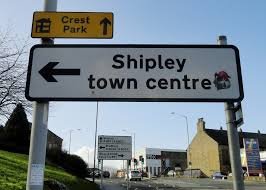
The Great Shipley -West Yorkshire
Early Origins (Prehistoric – Medieval)
- Evidence suggests the area around Shipley was inhabited as far back as the late Bronze Age.
- The name “Shipley” comes from Old English:
- “scīp” (sheep) + “lēah” (clearing or meadow)
meaning “sheep pasture” or “clearing for sheep.”
- “scīp” (sheep) + “lēah” (clearing or meadow)
- Shipley is recorded in the Domesday Book (1086), showing it was already an established settlement after the Norman Conquest.
At this stage, Shipley was a small agricultural community controlled by local landowners.
Medieval to Early Modern Period (1100–1700s)
- The area remained largely rural, centred on farming and small hamlets.
- Land was controlled by lords of the manor, with little urban development.
For centuries, Shipley stayed a quiet countryside settlement with minimal population growth.
Industrial Revolution (Late 1700s–1800s)
This is where Shipley’s real transformation begins.
Key changes:
- Growth of the textile industry in nearby Bradford
- Construction of major transport routes:
- Leeds and Liverpool Canal
- River Aire navigation
These made Shipley:
A transport hub and crossroads town linking Leeds, Bradford, and Skipton
The Saltaire Influence
One of the most important developments nearby was Saltaire.
- Built in 1851 by industrialist Titus Salt
- Designed as a model village for mill workers
- Included:
- Mills
- Housing
- Schools and churches
This turned the Shipley area into a major centre of textile manufacturing and population growth.
Victorian Expansion (1800s)
- Shipley expanded rapidly into a busy industrial town
- Development of:
- Mills (wool and textiles)
- Railways and canal links
- Housing for workers
By the late 19th century, Shipley was fully integrated into the industrial economy of West Yorkshire.
20th Century: Decline & Change
Industrial decline
- Like much of northern England, Shipley suffered from the decline of textile manufacturing in the 20th century.
- Many mills closed or were demolished
Only a few, such as Salts Mill, survived and were repurposed.
Post-war redevelopment (1950s–1980s)
- Large areas of old housing were cleared as slums
- Thousands of homes demolished and replaced with modern buildings
- New infrastructure added:
- Shopping areas
- Market square
- Library and public facilities
This dramatically changed the look of the town centre.
Administrative changes
- Shipley was once its own urban district
- In 1974, it became part of the City of Bradford metropolitan district
Modern Shipley (Late 20th Century – Today)
Today, Shipley is:
- A commuter town near Bradford and Leeds
- Closely connected to Bradford
- A gateway to countryside areas like the Yorkshire Dales
Regeneration highlights:
- Old mills converted into:
- Apartments
- Art galleries
- Business spaces
- Growth of cultural and leisure spaces around Saltaire
The town has shifted from industrial production → service, culture, and residential use.
Bottom Line:
There’s lot to explore in Bingley with a proud history and friendly locals. If you ever require a 2 bedroom holiday let cottage to stay whilst exploring the area, then look no further than Cosy Holiday Lettings